Welcome to your Member Dashboard
Welcome to our Members Only Area. This area is regularly updated with useful information and events so please keep an eye on it.
To join our member’s only facebook page please visit PCP Member’s Only Facebook Group and enter the code PCP2026 to gain access.
There are Free webinars for Members so please look at the ‘Upcoming Events’ tab to find out and register for these.
If you have already set up your pet business and would like to have your business details then please fill out the Directory Details form using the link below, submit your insurance (not to be made public) (and license, if applicable) details, and we will manually check your details and add to our online directory so we will do this as quickly as we possibly can but it make take a couple of working days. This directory is for members only.
To edit your profile please click the cog at the top and click ‘My Account’ and to navigate back to this page from the Account Page click ‘Profile’.
To log out please click the cog at the top and click ‘Log Out’.
Add your Details to our Public Member’s Directory Here
Pet Care Partnership Code of Conduct
Member Terms and Conditions
Membership Certificate Certificate of Membership
Logo to use on marketing materials Logo
Unlicensed campaign materials
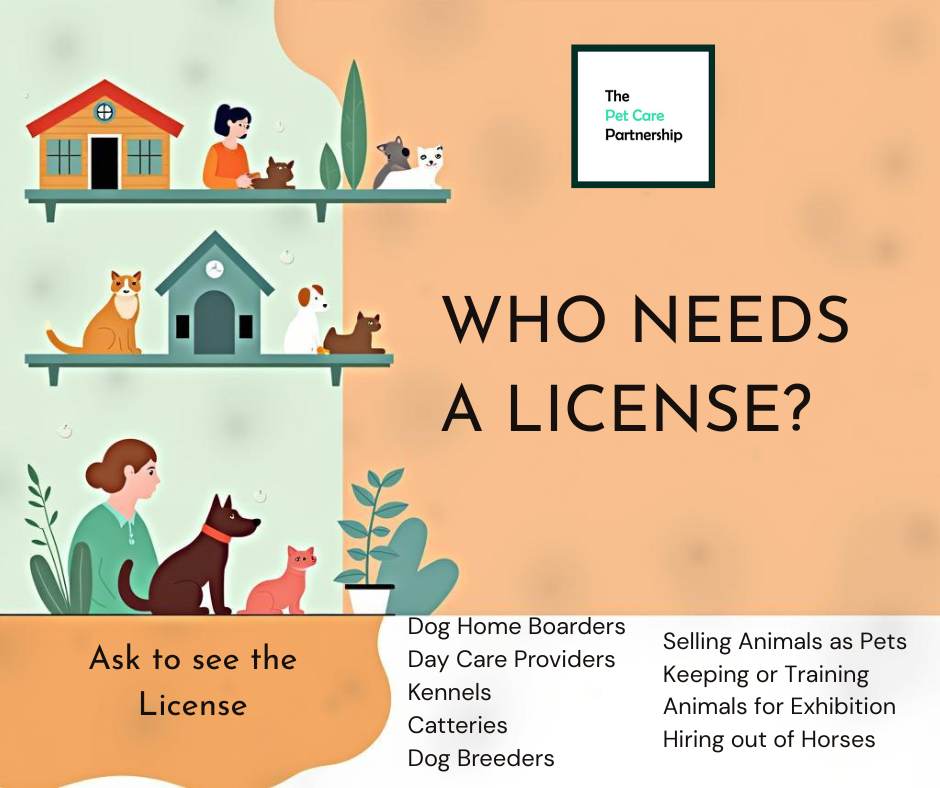
Who Needs a License Infographic

Your PCP membership entitles you to a free 45 minute consultation call with our partner company, Support 4 Business.
You may use your call to talk about any business-related subject, the time is yours and you may use it as you wish.
Calls are often used to talk about obtaining an animal welfare licence, growing your business, structuring and scheduling, terms and conditions, handling complaints or difficult customers and managing price increases.
Feel free to contact Support 4 Pet Business with any questions that you have. You can send a message to book your call here:
https://www.support4petbusiness.co.uk/pet-care-partnership
Top 10 things to consider when starting a pet business
Top 10 ideas to grow your pet business
Help Sheet Vaccination Records
Help Sheet Worm and Flea Treatments
Help Sheet Vaccination Records
Help Sheet Starting Pet Business 1
Help Sheet Starting Pet Business 2
Help Sheet Home Boarding Folders
Help Sheet Do I Need a Home Boarding Licence
Free online mini Bleeding Control Course – sign up here… Free Online Course
Starting a Pet Business (iPET recognised) Course
Growing your pet business (iPET recognised) Course
Past Webinars
Mini Pet First Aid Refresher Feb 2026
Taking on Staff by Emma Gibbbs of HaRper Consultancy May 2026
Please fill out the form to request joining details for the webinars. Joining details will be emailed to you a few days before each event. If you can’t make it, webinars will be recorded and uploaded on here as they happen so you can catch up if you can’t join them live.
June 2026
July 2026
Level 2 Canine First Aid (VTQ) Saturday 4th July 2026 More Info
Level 2 Pet First Aid (VTQ) Saturday 4th July 2026 More Info
Level 3 Pet First Aid for Pet Professionals (VTQ) Sunday 5th July 2026 More Info
Level 3 Advanced Pet First Aid (VTQ) Sunday 5th July 2026 More Info
August 2026
September 2026
**FREE FOR MEMBERS** Online ‘Health & Safety When working with Pets’ Webinar Thursday 17th September 7pm – email [email protected] for joining details
Level 2 Canine First Aid (VTQ) Saturday 19th September 2026 More Info
Level 2 Pet First Aid (VTQ) Saturday 19th September 2026 More Info
Level 3 Pet First Aid for Pet Professionals (VTQ) Sunday 20th September 2026 More Info
Level 3 Advanced Pet First Aid (VTQ) Sunday 20th September 2026 More Info
October 2026
**FREE FOR MEMBERS** Online Pet First Aid Refresher evening Thursday 8th October 7pm – email [email protected] for joining details
November 2026
Level 2 Canine First Aid (VTQ) Saturday 14th November 2026 More Info
Level 2 Pet First Aid (VTQ) Saturday 14th November 2026 More Info
Level 3 Pet First Aid for Pet Professionals (VTQ) Sunday 15th November 2026 More Info
Level 3 Advanced Pet First Aid (VTQ) Sunday 15th November 2026 More Info
December 2026
**FREE FOR MEMBERS** Online ‘Goal Setting and Strategy for 2027’ Webinar Thursday 3rd December 7pm – email [email protected] for joining details
22nd May 2026
How the New 55p HMRC Mileage Rate Benefits Mobile Pet Care Businesses
The UK government has announced an increase in HMRC’s approved business mileage rate for cars and vans from 45p to 55p per mile for the first 10,000 business miles in the 2026/27 tax year. The change is backdated to 6 April 2026 and applies to employees, self-employed workers, and business owners using personal vehicles for work journeys.
For mobile pet care businesses, this increase represents a major financial boost at a time when fuel, insurance, maintenance, and vehicle costs remain high.
Why Mileage Matters in Mobile Pet Care
Unlike traditional pet businesses that operate from a fixed salon or clinic, mobile pet care services depend heavily on travel. Businesses such as:
- Mobile dog grooming
- Pet sitting
- Dog walking
- Mobile veterinary support
- Pet taxi services
- Home visit pet care
all rely on vehicles as a core part of daily operations.
Staff and business owners may travel hundreds of miles each week between client homes, grooming appointments, suppliers, emergency call-outs, and veterinary visits.
The mileage allowance is designed to help cover the real cost of using a vehicle for business purposes, including:
- Fuel
- Tyres
- Servicing
- Insurance
- Road tax
- Vehicle depreciation
- Wear and tear
HMRC’s approved mileage allowance payments (AMAPs) allow these costs to be reimbursed tax-free within the approved limits.
The Financial Impact of the Increase
The increase from 45p to 55p per mile means businesses can now claim an additional 10p for every qualifying mile travelled up to 10,000 miles annually.
For a mobile pet grooming business travelling 8,000 business miles per year:
- Old rate: 8,000 × 45p = £3,600
- New rate: 8,000 × 55p = £4,400
This creates an additional £800 in allowable mileage expenses.
For sole traders, this reduces taxable profit. For limited companies, it increases tax-efficient reimbursement options for directors and employees.
Businesses operating multiple mobile vans or employing several pet care staff could save thousands of pounds annually.
Relief for Rising Vehicle Costs
Many small businesses and self-employed workers have argued for years that the old 45p rate no longer reflected the true cost of running a vehicle. The rate had remained unchanged since 2011 despite significant increases in fuel prices, servicing costs, insurance premiums, and inflation.
The new 55p rate is widely viewed as overdue support for workers who rely on driving to earn a living.
Online reactions from small business communities and contractors described the increase as “long overdue” and welcomed the additional support for work-related travel expenses.
Improved Cash Flow for Small Pet Businesses
Mobile pet care businesses often operate with tight margins. Fuel costs alone can significantly affect profitability, especially in rural areas or businesses covering large service zones.
The higher mileage rate improves cash flow by:
- Increasing allowable business deductions
- Reducing overall tax liabilities
- Helping offset increased operating expenses
- Supporting sustainable pricing structures
This is especially important for independent groomers, dog walkers, and pet carers who use their personal vehicles daily.
Encouraging Business Growth
The increase may also encourage expansion within the mobile pet care sector.
Businesses may now feel more confident:
- Expanding service areas
- Taking on more home visits
- Hiring mobile staff
- Offering specialist transport services
- Running additional mobile grooming vans
The additional mileage relief can make growth more financially manageable.
Administrative Simplicity
One of the biggest advantages of HMRC’s mileage system is simplicity.
Instead of calculating every fuel receipt, repair bill, or maintenance cost separately, businesses can use the flat mileage allowance method provided accurate mileage records are maintained.
This reduces bookkeeping complexity and administrative burden for small business owners.
HMRC requires records showing:
- Date of travel
- Journey purpose
- Start and end locations
- Total business miles travelled
Good mileage tracking also helps businesses monitor route efficiency and operational costs more effectively.
A Positive Step for the Mobile Pet Industry
The increase to 55p per mile is particularly valuable for industries built around travel and customer convenience. Mobile pet care businesses provide essential services directly to customers’ homes, reducing stress for pets and improving accessibility for owners.
By increasing mileage relief, the government is effectively recognising the growing cost pressures faced by mobile workers and small service businesses across the UK.
For mobile pet businesses, the updated mileage allowance offers meaningful financial support, improved tax efficiency, and greater flexibility to grow and operate sustainably in an increasingly cost-sensitive market.
13th May 2026
Dog licences explored to tackle ownership issues
Could this be the answer to irresponsible pet owners?
26th March 2026
Should UK rehoming centres be licensed?
What are your thoughts? https://www.bbc.co.uk/news/articles/crm1wlpdjxmo
29th January 2026
UK Pet Industry in 2026: A Sector at the Crossroads of Growth, Innovation and Regulation
London, UK — January 29, 2026 — The United Kingdom’s pet industry continues to expand rapidly in 2026, driven by sustained pet ownership, premiumisation of products and services, and increasing demands for professional standards — even as rising costs and regulatory scrutiny reshape the landscape.
Booming Market Under Pressure
Pets have become integral to British family life: over half of UK households now own at least one animal, with dogs and cats leading the way. According to industry estimates, the number of companion animals reached around £36 million in recent years, underpinning billions of pounds in annual spending on food, care, and services. Premium segments — from high-quality nutrition to specialised enrichment — are expanding alongside traditional categories.
Within the broader pet food and treats market, growth remains robust. The UK dog food sector is forecast to reach nearly £3.9 billion in 2026, supported by innovation in sustainable proteins, functional nutrition, and e-commerce distribution channels. Meanwhile, the pet snacks and treats market is expected to hit around £1.4 billion by the end of 2026, as treats shift from occasional rewards to nutritional and behavioural tools for owners.
Pet nutraceuticals — supplements targeting digestive health, joint support, and immunity — are also gaining momentum, with the segment projected to grow significantly into the next decade.
Pet Ownership and Consumer Behaviour
Consumer behaviours evolving in 2026 further illustrate how pets are treated as full family members. A recent survey found that nearly half of UK pet owners are making New Year’s resolutions for their pets, with priorities such as improved health, wellbeing, and even pet-friendly travel plans.
At the same time, rising costs — particularly in veterinary care — have put pressure on households. Public debates over high vet bills continue, prompting government intervention and calls for more transparent pricing.
Regulation and Professional Standards
In one of the most significant policy moves affecting the sector this year, the UK government announced plans to overhaul the veterinary market to address surging costs and limited price transparency. The proposed reforms would require practices to publish price lists for common treatments and disclose ownership structures, with all clinics needing official operating licences — a shift aimed at increasing competition and empowering consumers.
Industry professionals — from vets to pet service providers — see this as a watershed moment for accountability and standards, even as debates continue around affordability and access to care.
Innovation and Premiumisation
Innovation plays a central role in the UK’s pet economy. Following the UK’s approval of lab-grown proteins for animal consumption, cultivated meat treats for dogs — combining lab-grown chicken with plant-based ingredients — have started rolling out in retail tests. This sustainable approach to pet nutrition reflects broader consumer interest in ethical and environmental solutions.
Brands like London-based KatKin have also attracted major investment, with recent funding rounds fueling expansion of personalised, human-quality nutrition for cats — mirroring premiumisation trends seen across the industry.
Product trends for 2026 show a strong appetite for clean-label treats, functional chews, and enrichment toys that support physical and mental wellbeing — underscoring how owners increasingly seek products that deliver both efficacy and transparency.
Industry Ecosystem and Future Outlook
The UK pet industry’s ecosystem extends beyond food and treats. Professional services such as pet sitting, walking, grooming, and wellness support are experiencing heightened demand, with consumers placing greater emphasis on trust, insurance, and formal qualifications.
Meanwhile, conferences and industry events continue to foster collaboration and business growth, bringing together pet entrepreneurs and professionals to share strategic insights and network.
As the industry matures, stakeholders say a balance between innovation, professionalisation, and consumer protection will be key — especially against the backdrop of economic challenges and an increasingly discerning pet-owner base.






13th May 2026
Unlicensed Dog Boarder banned and fined
A woman from Little Lever has been banned from running a dog care business after admitting to operating without the correct licence and misleading customers into believing her services were legitimate.
The court heard that the defendant had provided dog boarding and daycare services for several years despite repeated warnings from council licensing officers. Investigators found she had continued to advertise and accept payments from customers while failing to meet the legal standards required for licensed animal care businesses.
Magistrates ordered her to stop operating the business and imposed financial penalties, including fines and court costs. Authorities said the prosecution was intended to protect animal welfare and reassure pet owners that licensed businesses must meet strict safety and care requirements.
Bolton Council officials said anyone providing dog boarding or daycare services must obtain the correct licence and comply with regulations designed to ensure animals are kept in safe and suitable conditions. They added that enforcement action would continue against operators who ignore the rules.
23rd April 2026
Updated Statutory guidance (England)
Dog day care licensing: statutory guidance for local authorities
Recent updates to the Dog Day Care Statutory Guidance mark a clear shift in regulatory expectations, turning what were once considered “best practices” into enforceable minimum standards. For providers, this means that compliance is no longer about demonstrating good intent—it now requires measurable, documented adherence ahead of local authority inspections.
One of the most significant changes is the introduction of the “2x” rest area rule. Previously, operators were asked to provide “adequate” space for dogs to rest, a term that left room for interpretation. The revised guidance removes that ambiguity. Now, any designated sleeping or rest area must be at least twice the size required for a dog to lie flat. This creates a clear, quantifiable benchmark that inspectors can assess. In practical terms, day care operators will need to review their current layouts—particularly pods, crates, or partitioned rest zones—to ensure they can accommodate their largest dogs within this new requirement. For some facilities, this may mean reducing capacity or redesigning rest areas altogether.
Equally impactful are the tightened restrictions around crating. The updated guidance places firm limits on both duration and circumstances. Dogs may now only be crated for a maximum of one hour within any eight-hour period, significantly reducing reliance on containment as a management tool. Beyond this time restriction, crating is only permitted if it reflects the dog’s established routine at home, reinforcing a welfare-first approach that prioritises familiarity and comfort. Additionally, operators must obtain explicit written consent from the owner before using a crate at all. This introduces a new administrative responsibility, requiring clear documentation and record-keeping to demonstrate compliance.
Together, these changes signal a broader direction in regulation—one that emphasises transparency, consistency, and animal welfare backed by measurable standards. For dog day care providers, adapting early will be key. Facilities that proactively audit their space, update their policies, and strengthen their documentation processes will be better positioned not only to meet inspection requirements but to deliver a higher standard of care.
7th April 2026
Updated Guidance on Reporting Animal Licensing Fees by Local Authorities in England
The reporting of animal activity licensing fees by local authorities in England has been clarified and strengthened through recent updates to statutory guidance issued by the Department for Environment, Food & Rural Affairs (Defra). These updates, most recently amended in April 2026, reinforce transparency, consistency, and central oversight in how licensing data—particularly fee information—is collected and submitted to central government.
This article explains the updated requirements, their legal context, and the practical implications for local authorities.
- Legislative and Policy Context
Animal activity licensing in England is governed primarily by the Animal Welfare (Licensing of Activities Involving Animals) (England) Regulations 2018. These regulations require businesses involved in activities such as dog breeding, pet sales, boarding, and horse hiring to obtain licences from local authorities.
Local authorities are responsible not only for issuing licences and enforcing compliance, but also for setting and charging fees associated with these functions. The updated statutory guidance supplements the regulations by outlining procedural expectations—including reporting obligations.
- Core Reporting Requirement
A key feature of the updated guidance is the mandatory annual reporting duty imposed on all local authorities.
Local authorities must submit data to the Secretary of State by 31 May each year, covering the preceding financial year (e.g. 1 April 2025 to 31 March 2026).
The report must include:
- The number of licences in force for each licensable activity as at 1 April
- The average level of fees charged for licences granted or renewed during the reporting period
This requirement ensures that central government has a national overview of licensing activity and fee structures.
- New and Updated Features (2025–2026 Guidance)
- Introduction of an Online Reporting Form
The April 2026 update introduced a dedicated online reporting form, streamlining submission and standardising data collection across authorities.
This represents a shift away from more fragmented or informal reporting practices, helping ensure consistency and completeness.
- Clearer Reporting Timelines
The guidance reiterates strict deadlines and reporting periods, reducing ambiguity. Authorities are expected to prepare data in advance and submit promptly by the statutory deadline.
- Emphasis on Fee Transparency
By requiring the average level of fees charged, the guidance promotes transparency and enables benchmarking across authorities. This is particularly important given that fees are locally determined.
- What Counts as “Fees” in Reporting?
Under Regulation 13, local authorities may charge fees for a range of licensing-related activities, including:
- Processing applications and conducting inspections
- Ongoing compliance checks
- Enforcement against unlicensed operators
- Administrative work, including compiling and submitting required data
The reported “average fee” must reflect the charges applied to licences granted or renewed within the reporting period.
- Principles Governing Fee Setting
Although authorities have discretion in setting fees, the guidance reinforces that fees must be:
- Fair and reasonable
- Cost-recovering rather than profit-making
- Consistent with broader regulatory principles, including the Regulators’ Code
The reporting requirement effectively acts as a soft accountability mechanism, enabling central government to identify anomalies or inconsistencies in fee structures.
- Purpose and Policy Rationale
The strengthened reporting framework serves several policy objectives:
- National Oversight
Centralised data allows Defra to monitor how licensing is implemented across England and assess whether the regime is functioning effectively.
- Benchmarking and Consistency
Comparing fee levels across authorities can highlight disparities and encourage more consistent approaches.
- Evidence-Based Policy Development
Collected data supports future reforms, helping government understand cost pressures, enforcement trends, and sector dynamics.
- Administrative Accountability
Requiring authorities to report on fees reinforces the expectation that fee-setting decisions are justified and transparent.
- Practical Implications for Local Authorities
Local authorities must now:
- Maintain accurate records of licences issued and fees charged throughout the year
- Calculate average fee levels across different licence types
- Ensure timely submission via the official reporting mechanism
- Allocate administrative resources to meet reporting obligations
Failure to comply may not directly breach the 2018 Regulations, but it could attract scrutiny from Defra and undermine confidence in local regulatory practices.
- Conclusion
The updated guidance marks a significant step toward greater transparency and consistency in animal licensing across England. By formalising the reporting of both licence numbers and fee levels, Defra is strengthening oversight of a system that is largely decentralised in operation.
For local authorities, the changes require more structured data management and clearer justification of fee-setting practices. For policymakers, they provide a richer evidence base to evaluate and refine the animal licensing regime in the years ahead.
26th March 2026
New livestock worrying law comes into force: what pet professionals need to know
A major update to livestock protection legislation has now come into force across England and Wales, introducing tougher penalties and expanded enforcement powers aimed at reducing dog attacks on farm animals.
The Dogs (Protection of Livestock) (Amendment) Act 2025, which took effect on 18 March 2026, represents the most significant overhaul of livestock worrying laws in more than 70 years. The legislation updates the original 1953 framework to reflect modern farming practices, dog ownership trends and enforcement needs.
Stronger penalties and wider enforcement powers
Under the new law, courts can now impose unlimited fines for livestock worrying offences, replacing the previous £1,000 cap. () This marks a substantial shift in how seriously such incidents are treated, reflecting the financial and welfare impact on farmers.
Police have also been granted enhanced powers, including the ability to:
- Seize and detain dogs suspected of posing a risk
- Enter premises with a warrant
- Collect evidence such as DNA samples
- Recover costs associated with investigations and dog detention
These changes are designed to improve enforcement and increase accountability among dog owners.
Broader definition of livestock worrying
The updated legislation expands what constitutes an offence. A dog does not need to physically injure an animal for an incident to qualify. Behaviours such as chasing, stalking or causing distress to livestock are now clearly included.
Importantly, the law also widens:
- The types of animals covered, now including species such as alpacas and llamas
- The locations where offences can occur, extending beyond farmland to include public footpaths and roads where livestock are present
This reflects the reality that many incidents occur when dogs are walked through mixed-use rural spaces.
Why this matters for pet professionals
For veterinary teams, behaviourists, trainers, dog walkers and pet sitters, the new law brings both professional responsibilities and opportunities for client education.
Key implications include:
1. Increased duty to educate clients
Pet professionals are well-placed to reinforce the importance of keeping dogs under control around livestock. Clear guidance on lead use, recall training and risk awareness will be essential.
2. Greater legal exposure for clients
With unlimited fines now possible, clients may face far more severe consequences if their dog is involved in an incident. This raises the importance of preventative advice and responsible ownership messaging.
3. Behaviour and training considerations
Dogs with high prey drive or poor recall may require targeted behaviour plans. Professionals may see increased demand for training focused on livestock avoidance and impulse control.
4. Welfare and ethical considerations
Livestock worrying can result in injury, miscarriage or death of farm animals, as well as psychological stress. The strengthened law aligns with broader animal welfare priorities across the UK.
A shift in accountability
The introduction of this legislation signals a clear policy direction: greater accountability for dog owners and stronger protection for farm animals. It also reflects wider government efforts to improve animal welfare standards and support rural communities affected by these incidents.
For pet professionals, the law serves as a reminder that responsible dog ownership extends beyond the home and urban environment. Proactive education, training and communication will be key to helping clients navigate these new legal expectations—and to preventing incidents before they occur.
Now is the time to update client advice, training protocols and educational materials to reflect the new law. Ensuring clients understand both the risks and their responsibilities will be critical in reducing livestock worrying incidents going forward.
29th January 2026
UK Dog Boarding Licences in 2026: New Standards and Stricter Enforcement Shape the Sector
London, UK — January 29, 2026 — As pet ownership continues to rise across the United Kingdom, the regulatory framework governing dog boarding businesses is evolving rapidly in 2026. Local authorities and national guidance are enforcing stricter licensing requirements designed to boost animal welfare, improve business standards, and reduce risks for pet owners.
Under current legislation — primarily the Animal Welfare (Licensing of Activities Involving Animals) (England) Regulations 2018 — commercial enterprises that provide overnight boarding for dogs must hold a valid licence issued by their local council. The same rules apply whether the service is offered from a dedicated kennel facility or a home boarding environment.
Welfare and Safety at the Forefront
The statutory licensing framework sets out detailed minimum standards that must be met before a licence is granted or renewed. These include provisions on housing conditions, hygiene, feeding, exercise, staff competency, disease control, and enrichment for animals in care. Licence holders must demonstrate that they can provide safe, species-appropriate environments — from indoor sleeping spaces to access to exercise and stimulation activities.
For example, commercial kennel boarding premises must ensure that dogs are kept in units of suitable size and design, with controlled temperature, adequate lighting, and secure outdoor access. Staff must be appropriately trained in animal welfare and behaviour, and businesses are required to implement written training policies and annual appraisals.
Home Boarding Requirements
In 2026, the guidance for home boarding licences remains equally rigorous. Pet care providers operating from their own homes — whether for day stays or overnight care — must meet conditions relating to space, separation of animals, and welfare management. These include ensuring enough indoor room per dog, safe outdoor access, and policies for disease prevention and owner consent.
Local councils explicitly state that areas such as conservatories, lofts, or garages must meet proper standards to qualify as suitable boarding spaces, and all home boarding operations must define the maximum number of dogs that can be cared for, in line with the health and safety of both pets and providers.
Star Rating and Compliance Incentives
Across much of England, licensing is tied to a star rating scheme, which reflects how well businesses meet higher welfare and operating standards. A higher ranking — typically 4 or 5 stars — can earn a business a longer licence term (up to three years), reducing administrative costs and signalling quality to customers.
Local authorities also retain discretion to inspect premises and award ratings based on compliance levels, which in turn affects consumer trust and market reputation. Some councils require veterinary inspections during licence applications or renewals to verify that standards are being upheld.
Enforcement and Public Protection
Authorities have signalled increased enforcement activity in 2026, particularly targeting unlicensed boarding operations. Pet owners are being reminded to check for valid licensing when choosing a boarding provider, as operating without a licence can result in fines, licence revocations, and even criminal penalties under local animal welfare laws.
Industry officials say that while some informal dog boarders — especially those offering care as a side income — have previously skirted regulations, councils are increasingly cracking down to ensure animal protection and business accountability.
Looking Ahead
Experts suggest that the trend towards stricter licensing, star ratings and standardised welfare conditions will continue in the coming years. Pet owners, regulators and advocates alike see these changes as essential to building confidence in the dog boarding sector, improving animal health outcomes, and professionalising what has historically been a loosely regulated corner of the pet care market.
As the UK’s love for dogs grows, so too does the need for transparent, accountable, and welfare-focused boarding practices — and 2026’s licensing regime reflects that shift.
Pet Business Survey
Coming Soon!
Membership Certificate Certificate of Membership
Logo to use on marketing materials Logo
Unlicensed campaign materials
Who Needs a License Infographic
Your PCP membership entitles you to a free 45 minute consultation call with our partner company, Support 4 Business.
You may use your call to talk about any business-related subject, the time is yours and you may use it as you wish.
Calls are often used to talk about obtaining an animal welfare licence, growing your business, structuring and scheduling, terms and conditions, handling complaints or difficult customers and managing price increases.
Feel free to contact Support 4 Pet Business with any questions that you have. You can send a message to book your call here:
https://www.support4petbusiness.co.uk/pet-care-partnership
Top 10 things to consider when starting a pet business
Top 10 ideas to grow your pet business
Help Sheet Vaccination Records
Help Sheet Worm and Flea Treatments
Help Sheet Vaccination Records
Help Sheet Starting Pet Business 1
Help Sheet Starting Pet Business 2
Help Sheet Home Boarding Folders
Help Sheet Do I Need a Home Boarding Licence
Free online mini Bleeding Control Course – sign up here… Free Online Course
Starting a Pet Business (iPET recognised) Course
Growing your pet business (iPET recognised) Course
Past Webinars
Mini Pet First Aid Refresher Feb 2026
Taking on Staff by Emma Gibbbs of HaRper Consultancy May 2026
Please fill out the form to request joining details for the webinars. Joining details will be emailed to you a few days before each event. If you can’t make it, webinars will be recorded and uploaded on here as they happen so you can catch up if you can’t join them live.
June 2026
July 2026
Level 2 Canine First Aid (VTQ) Saturday 4th July 2026 More Info
Level 2 Pet First Aid (VTQ) Saturday 4th July 2026 More Info
Level 3 Pet First Aid for Pet Professionals (VTQ) Sunday 5th July 2026 More Info
Level 3 Advanced Pet First Aid (VTQ) Sunday 5th July 2026 More Info
August 2026
September 2026
**FREE FOR MEMBERS** Online ‘Health & Safety When working with Pets’ Webinar Thursday 17th September 7pm – email [email protected] for joining details
Level 2 Canine First Aid (VTQ) Saturday 19th September 2026 More Info
Level 2 Pet First Aid (VTQ) Saturday 19th September 2026 More Info
Level 3 Pet First Aid for Pet Professionals (VTQ) Sunday 20th September 2026 More Info
Level 3 Advanced Pet First Aid (VTQ) Sunday 20th September 2026 More Info
October 2026
**FREE FOR MEMBERS** Online Pet First Aid Refresher evening Thursday 8th October 7pm – email [email protected] for joining details
November 2026
Level 2 Canine First Aid (VTQ) Saturday 14th November 2026 More Info
Level 2 Pet First Aid (VTQ) Saturday 14th November 2026 More Info
Level 3 Pet First Aid for Pet Professionals (VTQ) Sunday 15th November 2026 More Info
Level 3 Advanced Pet First Aid (VTQ) Sunday 15th November 2026 More Info
December 2026
**FREE FOR MEMBERS** Online ‘Goal Setting and Strategy for 2027’ Webinar Thursday 3rd December 7pm – email [email protected] for joining details
22nd May 2026
How the New 55p HMRC Mileage Rate Benefits Mobile Pet Care Businesses
The UK government has announced an increase in HMRC’s approved business mileage rate for cars and vans from 45p to 55p per mile for the first 10,000 business miles in the 2026/27 tax year. The change is backdated to 6 April 2026 and applies to employees, self-employed workers, and business owners using personal vehicles for work journeys.
For mobile pet care businesses, this increase represents a major financial boost at a time when fuel, insurance, maintenance, and vehicle costs remain high.
Why Mileage Matters in Mobile Pet Care
Unlike traditional pet businesses that operate from a fixed salon or clinic, mobile pet care services depend heavily on travel. Businesses such as:
- Mobile dog grooming
- Pet sitting
- Dog walking
- Mobile veterinary support
- Pet taxi services
- Home visit pet care
all rely on vehicles as a core part of daily operations.
Staff and business owners may travel hundreds of miles each week between client homes, grooming appointments, suppliers, emergency call-outs, and veterinary visits.
The mileage allowance is designed to help cover the real cost of using a vehicle for business purposes, including:
- Fuel
- Tyres
- Servicing
- Insurance
- Road tax
- Vehicle depreciation
- Wear and tear
HMRC’s approved mileage allowance payments (AMAPs) allow these costs to be reimbursed tax-free within the approved limits.
The Financial Impact of the Increase
The increase from 45p to 55p per mile means businesses can now claim an additional 10p for every qualifying mile travelled up to 10,000 miles annually.
For a mobile pet grooming business travelling 8,000 business miles per year:
- Old rate: 8,000 × 45p = £3,600
- New rate: 8,000 × 55p = £4,400
This creates an additional £800 in allowable mileage expenses.
For sole traders, this reduces taxable profit. For limited companies, it increases tax-efficient reimbursement options for directors and employees.
Businesses operating multiple mobile vans or employing several pet care staff could save thousands of pounds annually.
Relief for Rising Vehicle Costs
Many small businesses and self-employed workers have argued for years that the old 45p rate no longer reflected the true cost of running a vehicle. The rate had remained unchanged since 2011 despite significant increases in fuel prices, servicing costs, insurance premiums, and inflation.
The new 55p rate is widely viewed as overdue support for workers who rely on driving to earn a living.
Online reactions from small business communities and contractors described the increase as “long overdue” and welcomed the additional support for work-related travel expenses.
Improved Cash Flow for Small Pet Businesses
Mobile pet care businesses often operate with tight margins. Fuel costs alone can significantly affect profitability, especially in rural areas or businesses covering large service zones.
The higher mileage rate improves cash flow by:
- Increasing allowable business deductions
- Reducing overall tax liabilities
- Helping offset increased operating expenses
- Supporting sustainable pricing structures
This is especially important for independent groomers, dog walkers, and pet carers who use their personal vehicles daily.
Encouraging Business Growth
The increase may also encourage expansion within the mobile pet care sector.
Businesses may now feel more confident:
- Expanding service areas
- Taking on more home visits
- Hiring mobile staff
- Offering specialist transport services
- Running additional mobile grooming vans
The additional mileage relief can make growth more financially manageable.
Administrative Simplicity
One of the biggest advantages of HMRC’s mileage system is simplicity.
Instead of calculating every fuel receipt, repair bill, or maintenance cost separately, businesses can use the flat mileage allowance method provided accurate mileage records are maintained.
This reduces bookkeeping complexity and administrative burden for small business owners.
HMRC requires records showing:
- Date of travel
- Journey purpose
- Start and end locations
- Total business miles travelled
Good mileage tracking also helps businesses monitor route efficiency and operational costs more effectively.
A Positive Step for the Mobile Pet Industry
The increase to 55p per mile is particularly valuable for industries built around travel and customer convenience. Mobile pet care businesses provide essential services directly to customers’ homes, reducing stress for pets and improving accessibility for owners.
By increasing mileage relief, the government is effectively recognising the growing cost pressures faced by mobile workers and small service businesses across the UK.
For mobile pet businesses, the updated mileage allowance offers meaningful financial support, improved tax efficiency, and greater flexibility to grow and operate sustainably in an increasingly cost-sensitive market.
13th May 2026
Dog licences explored to tackle ownership issues
Could this be the answer to irresponsible pet owners?
26th March 2026
Should UK rehoming centres be licensed?
What are your thoughts? https://www.bbc.co.uk/news/articles/crm1wlpdjxmo
29th January 2026
UK Pet Industry in 2026: A Sector at the Crossroads of Growth, Innovation and Regulation
London, UK — January 29, 2026 — The United Kingdom’s pet industry continues to expand rapidly in 2026, driven by sustained pet ownership, premiumisation of products and services, and increasing demands for professional standards — even as rising costs and regulatory scrutiny reshape the landscape.
Booming Market Under Pressure
Pets have become integral to British family life: over half of UK households now own at least one animal, with dogs and cats leading the way. According to industry estimates, the number of companion animals reached around £36 million in recent years, underpinning billions of pounds in annual spending on food, care, and services. Premium segments — from high-quality nutrition to specialised enrichment — are expanding alongside traditional categories.
Within the broader pet food and treats market, growth remains robust. The UK dog food sector is forecast to reach nearly £3.9 billion in 2026, supported by innovation in sustainable proteins, functional nutrition, and e-commerce distribution channels. Meanwhile, the pet snacks and treats market is expected to hit around £1.4 billion by the end of 2026, as treats shift from occasional rewards to nutritional and behavioural tools for owners.
Pet nutraceuticals — supplements targeting digestive health, joint support, and immunity — are also gaining momentum, with the segment projected to grow significantly into the next decade.
Pet Ownership and Consumer Behaviour
Consumer behaviours evolving in 2026 further illustrate how pets are treated as full family members. A recent survey found that nearly half of UK pet owners are making New Year’s resolutions for their pets, with priorities such as improved health, wellbeing, and even pet-friendly travel plans.
At the same time, rising costs — particularly in veterinary care — have put pressure on households. Public debates over high vet bills continue, prompting government intervention and calls for more transparent pricing.
Regulation and Professional Standards
In one of the most significant policy moves affecting the sector this year, the UK government announced plans to overhaul the veterinary market to address surging costs and limited price transparency. The proposed reforms would require practices to publish price lists for common treatments and disclose ownership structures, with all clinics needing official operating licences — a shift aimed at increasing competition and empowering consumers.
Industry professionals — from vets to pet service providers — see this as a watershed moment for accountability and standards, even as debates continue around affordability and access to care.
Innovation and Premiumisation
Innovation plays a central role in the UK’s pet economy. Following the UK’s approval of lab-grown proteins for animal consumption, cultivated meat treats for dogs — combining lab-grown chicken with plant-based ingredients — have started rolling out in retail tests. This sustainable approach to pet nutrition reflects broader consumer interest in ethical and environmental solutions.
Brands like London-based KatKin have also attracted major investment, with recent funding rounds fueling expansion of personalised, human-quality nutrition for cats — mirroring premiumisation trends seen across the industry.
Product trends for 2026 show a strong appetite for clean-label treats, functional chews, and enrichment toys that support physical and mental wellbeing — underscoring how owners increasingly seek products that deliver both efficacy and transparency.
Industry Ecosystem and Future Outlook
The UK pet industry’s ecosystem extends beyond food and treats. Professional services such as pet sitting, walking, grooming, and wellness support are experiencing heightened demand, with consumers placing greater emphasis on trust, insurance, and formal qualifications.
Meanwhile, conferences and industry events continue to foster collaboration and business growth, bringing together pet entrepreneurs and professionals to share strategic insights and network.
As the industry matures, stakeholders say a balance between innovation, professionalisation, and consumer protection will be key — especially against the backdrop of economic challenges and an increasingly discerning pet-owner base.
13th May 2026
Unlicensed Dog Boarder banned and fined
A woman from Little Lever has been banned from running a dog care business after admitting to operating without the correct licence and misleading customers into believing her services were legitimate.
The court heard that the defendant had provided dog boarding and daycare services for several years despite repeated warnings from council licensing officers. Investigators found she had continued to advertise and accept payments from customers while failing to meet the legal standards required for licensed animal care businesses.
Magistrates ordered her to stop operating the business and imposed financial penalties, including fines and court costs. Authorities said the prosecution was intended to protect animal welfare and reassure pet owners that licensed businesses must meet strict safety and care requirements.
Bolton Council officials said anyone providing dog boarding or daycare services must obtain the correct licence and comply with regulations designed to ensure animals are kept in safe and suitable conditions. They added that enforcement action would continue against operators who ignore the rules.
23rd April 2026
Updated Statutory guidance (England)
Dog day care licensing: statutory guidance for local authorities
Recent updates to the Dog Day Care Statutory Guidance mark a clear shift in regulatory expectations, turning what were once considered “best practices” into enforceable minimum standards. For providers, this means that compliance is no longer about demonstrating good intent—it now requires measurable, documented adherence ahead of local authority inspections.
One of the most significant changes is the introduction of the “2x” rest area rule. Previously, operators were asked to provide “adequate” space for dogs to rest, a term that left room for interpretation. The revised guidance removes that ambiguity. Now, any designated sleeping or rest area must be at least twice the size required for a dog to lie flat. This creates a clear, quantifiable benchmark that inspectors can assess. In practical terms, day care operators will need to review their current layouts—particularly pods, crates, or partitioned rest zones—to ensure they can accommodate their largest dogs within this new requirement. For some facilities, this may mean reducing capacity or redesigning rest areas altogether.
Equally impactful are the tightened restrictions around crating. The updated guidance places firm limits on both duration and circumstances. Dogs may now only be crated for a maximum of one hour within any eight-hour period, significantly reducing reliance on containment as a management tool. Beyond this time restriction, crating is only permitted if it reflects the dog’s established routine at home, reinforcing a welfare-first approach that prioritises familiarity and comfort. Additionally, operators must obtain explicit written consent from the owner before using a crate at all. This introduces a new administrative responsibility, requiring clear documentation and record-keeping to demonstrate compliance.
Together, these changes signal a broader direction in regulation—one that emphasises transparency, consistency, and animal welfare backed by measurable standards. For dog day care providers, adapting early will be key. Facilities that proactively audit their space, update their policies, and strengthen their documentation processes will be better positioned not only to meet inspection requirements but to deliver a higher standard of care.
7th April 2026
Updated Guidance on Reporting Animal Licensing Fees by Local Authorities in England
The reporting of animal activity licensing fees by local authorities in England has been clarified and strengthened through recent updates to statutory guidance issued by the Department for Environment, Food & Rural Affairs (Defra). These updates, most recently amended in April 2026, reinforce transparency, consistency, and central oversight in how licensing data—particularly fee information—is collected and submitted to central government.
This article explains the updated requirements, their legal context, and the practical implications for local authorities.
- Legislative and Policy Context
Animal activity licensing in England is governed primarily by the Animal Welfare (Licensing of Activities Involving Animals) (England) Regulations 2018. These regulations require businesses involved in activities such as dog breeding, pet sales, boarding, and horse hiring to obtain licences from local authorities.
Local authorities are responsible not only for issuing licences and enforcing compliance, but also for setting and charging fees associated with these functions. The updated statutory guidance supplements the regulations by outlining procedural expectations—including reporting obligations.
- Core Reporting Requirement
A key feature of the updated guidance is the mandatory annual reporting duty imposed on all local authorities.
Local authorities must submit data to the Secretary of State by 31 May each year, covering the preceding financial year (e.g. 1 April 2025 to 31 March 2026).
The report must include:
- The number of licences in force for each licensable activity as at 1 April
- The average level of fees charged for licences granted or renewed during the reporting period
This requirement ensures that central government has a national overview of licensing activity and fee structures.
- New and Updated Features (2025–2026 Guidance)
- Introduction of an Online Reporting Form
The April 2026 update introduced a dedicated online reporting form, streamlining submission and standardising data collection across authorities.
This represents a shift away from more fragmented or informal reporting practices, helping ensure consistency and completeness.
- Clearer Reporting Timelines
The guidance reiterates strict deadlines and reporting periods, reducing ambiguity. Authorities are expected to prepare data in advance and submit promptly by the statutory deadline.
- Emphasis on Fee Transparency
By requiring the average level of fees charged, the guidance promotes transparency and enables benchmarking across authorities. This is particularly important given that fees are locally determined.
- What Counts as “Fees” in Reporting?
Under Regulation 13, local authorities may charge fees for a range of licensing-related activities, including:
- Processing applications and conducting inspections
- Ongoing compliance checks
- Enforcement against unlicensed operators
- Administrative work, including compiling and submitting required data
The reported “average fee” must reflect the charges applied to licences granted or renewed within the reporting period.
- Principles Governing Fee Setting
Although authorities have discretion in setting fees, the guidance reinforces that fees must be:
- Fair and reasonable
- Cost-recovering rather than profit-making
- Consistent with broader regulatory principles, including the Regulators’ Code
The reporting requirement effectively acts as a soft accountability mechanism, enabling central government to identify anomalies or inconsistencies in fee structures.
- Purpose and Policy Rationale
The strengthened reporting framework serves several policy objectives:
- National Oversight
Centralised data allows Defra to monitor how licensing is implemented across England and assess whether the regime is functioning effectively.
- Benchmarking and Consistency
Comparing fee levels across authorities can highlight disparities and encourage more consistent approaches.
- Evidence-Based Policy Development
Collected data supports future reforms, helping government understand cost pressures, enforcement trends, and sector dynamics.
- Administrative Accountability
Requiring authorities to report on fees reinforces the expectation that fee-setting decisions are justified and transparent.
- Practical Implications for Local Authorities
Local authorities must now:
- Maintain accurate records of licences issued and fees charged throughout the year
- Calculate average fee levels across different licence types
- Ensure timely submission via the official reporting mechanism
- Allocate administrative resources to meet reporting obligations
Failure to comply may not directly breach the 2018 Regulations, but it could attract scrutiny from Defra and undermine confidence in local regulatory practices.
- Conclusion
The updated guidance marks a significant step toward greater transparency and consistency in animal licensing across England. By formalising the reporting of both licence numbers and fee levels, Defra is strengthening oversight of a system that is largely decentralised in operation.
For local authorities, the changes require more structured data management and clearer justification of fee-setting practices. For policymakers, they provide a richer evidence base to evaluate and refine the animal licensing regime in the years ahead.
26th March 2026
New livestock worrying law comes into force: what pet professionals need to know
A major update to livestock protection legislation has now come into force across England and Wales, introducing tougher penalties and expanded enforcement powers aimed at reducing dog attacks on farm animals.
The Dogs (Protection of Livestock) (Amendment) Act 2025, which took effect on 18 March 2026, represents the most significant overhaul of livestock worrying laws in more than 70 years. The legislation updates the original 1953 framework to reflect modern farming practices, dog ownership trends and enforcement needs.
Stronger penalties and wider enforcement powers
Under the new law, courts can now impose unlimited fines for livestock worrying offences, replacing the previous £1,000 cap. () This marks a substantial shift in how seriously such incidents are treated, reflecting the financial and welfare impact on farmers.
Police have also been granted enhanced powers, including the ability to:
- Seize and detain dogs suspected of posing a risk
- Enter premises with a warrant
- Collect evidence such as DNA samples
- Recover costs associated with investigations and dog detention
These changes are designed to improve enforcement and increase accountability among dog owners.
Broader definition of livestock worrying
The updated legislation expands what constitutes an offence. A dog does not need to physically injure an animal for an incident to qualify. Behaviours such as chasing, stalking or causing distress to livestock are now clearly included.
Importantly, the law also widens:
- The types of animals covered, now including species such as alpacas and llamas
- The locations where offences can occur, extending beyond farmland to include public footpaths and roads where livestock are present
This reflects the reality that many incidents occur when dogs are walked through mixed-use rural spaces.
Why this matters for pet professionals
For veterinary teams, behaviourists, trainers, dog walkers and pet sitters, the new law brings both professional responsibilities and opportunities for client education.
Key implications include:
1. Increased duty to educate clients
Pet professionals are well-placed to reinforce the importance of keeping dogs under control around livestock. Clear guidance on lead use, recall training and risk awareness will be essential.
2. Greater legal exposure for clients
With unlimited fines now possible, clients may face far more severe consequences if their dog is involved in an incident. This raises the importance of preventative advice and responsible ownership messaging.
3. Behaviour and training considerations
Dogs with high prey drive or poor recall may require targeted behaviour plans. Professionals may see increased demand for training focused on livestock avoidance and impulse control.
4. Welfare and ethical considerations
Livestock worrying can result in injury, miscarriage or death of farm animals, as well as psychological stress. The strengthened law aligns with broader animal welfare priorities across the UK.
A shift in accountability
The introduction of this legislation signals a clear policy direction: greater accountability for dog owners and stronger protection for farm animals. It also reflects wider government efforts to improve animal welfare standards and support rural communities affected by these incidents.
For pet professionals, the law serves as a reminder that responsible dog ownership extends beyond the home and urban environment. Proactive education, training and communication will be key to helping clients navigate these new legal expectations—and to preventing incidents before they occur.
Now is the time to update client advice, training protocols and educational materials to reflect the new law. Ensuring clients understand both the risks and their responsibilities will be critical in reducing livestock worrying incidents going forward.
29th January 2026
UK Dog Boarding Licences in 2026: New Standards and Stricter Enforcement Shape the Sector
London, UK — January 29, 2026 — As pet ownership continues to rise across the United Kingdom, the regulatory framework governing dog boarding businesses is evolving rapidly in 2026. Local authorities and national guidance are enforcing stricter licensing requirements designed to boost animal welfare, improve business standards, and reduce risks for pet owners.
Under current legislation — primarily the Animal Welfare (Licensing of Activities Involving Animals) (England) Regulations 2018 — commercial enterprises that provide overnight boarding for dogs must hold a valid licence issued by their local council. The same rules apply whether the service is offered from a dedicated kennel facility or a home boarding environment.
Welfare and Safety at the Forefront
The statutory licensing framework sets out detailed minimum standards that must be met before a licence is granted or renewed. These include provisions on housing conditions, hygiene, feeding, exercise, staff competency, disease control, and enrichment for animals in care. Licence holders must demonstrate that they can provide safe, species-appropriate environments — from indoor sleeping spaces to access to exercise and stimulation activities.
For example, commercial kennel boarding premises must ensure that dogs are kept in units of suitable size and design, with controlled temperature, adequate lighting, and secure outdoor access. Staff must be appropriately trained in animal welfare and behaviour, and businesses are required to implement written training policies and annual appraisals.
Home Boarding Requirements
In 2026, the guidance for home boarding licences remains equally rigorous. Pet care providers operating from their own homes — whether for day stays or overnight care — must meet conditions relating to space, separation of animals, and welfare management. These include ensuring enough indoor room per dog, safe outdoor access, and policies for disease prevention and owner consent.
Local councils explicitly state that areas such as conservatories, lofts, or garages must meet proper standards to qualify as suitable boarding spaces, and all home boarding operations must define the maximum number of dogs that can be cared for, in line with the health and safety of both pets and providers.
Star Rating and Compliance Incentives
Across much of England, licensing is tied to a star rating scheme, which reflects how well businesses meet higher welfare and operating standards. A higher ranking — typically 4 or 5 stars — can earn a business a longer licence term (up to three years), reducing administrative costs and signalling quality to customers.
Local authorities also retain discretion to inspect premises and award ratings based on compliance levels, which in turn affects consumer trust and market reputation. Some councils require veterinary inspections during licence applications or renewals to verify that standards are being upheld.
Enforcement and Public Protection
Authorities have signalled increased enforcement activity in 2026, particularly targeting unlicensed boarding operations. Pet owners are being reminded to check for valid licensing when choosing a boarding provider, as operating without a licence can result in fines, licence revocations, and even criminal penalties under local animal welfare laws.
Industry officials say that while some informal dog boarders — especially those offering care as a side income — have previously skirted regulations, councils are increasingly cracking down to ensure animal protection and business accountability.
Looking Ahead
Experts suggest that the trend towards stricter licensing, star ratings and standardised welfare conditions will continue in the coming years. Pet owners, regulators and advocates alike see these changes as essential to building confidence in the dog boarding sector, improving animal health outcomes, and professionalising what has historically been a loosely regulated corner of the pet care market.
As the UK’s love for dogs grows, so too does the need for transparent, accountable, and welfare-focused boarding practices — and 2026’s licensing regime reflects that shift.
Pet Business Survey
Coming Soon!